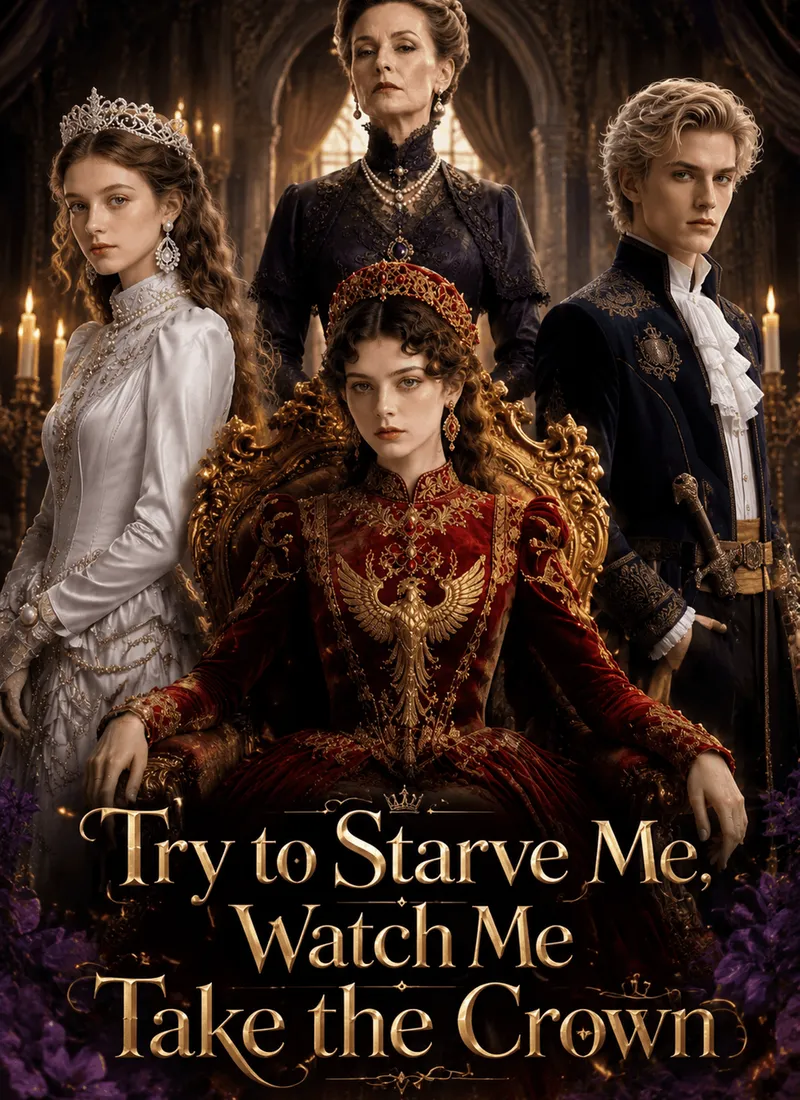
Try to Starve Me, Watch Me Take the Crown…
Mirabelle Vale, traumatized by childhood starvation and dismissed as 'unmarriageable' at 220 pounds, discovers golden captions exposing her half-sister Celia’s plot to seize the Crown Princess title—and starve her into lifelong servitude. With no time left, she must retrain her body, outwit court politics, and confront deep-seated fear—not for love or power, but for the simple, sacred right to eat.
Characters
Captain Gray
Royal Ranger assigned to the Westmore Royal Preserve; sharpwitted, observant, and initially petty, he becomes Mirabelle’s intellectual sparring partner and quiet ally in developing governance competence.
Celia
Mirabelle’s beautiful, brilliant, and ruthlessly ambitious halfsister; manipulative, socially polished, and determined to erase Mirabelle’s autonomy through control of her access to food.
Dr. Clara Wynn
Compassionate, nononsense physician who diagnoses Mirabelle’s foodrelated anxiety as trauma response—not moral failing—and guides her toward sustainable, embodied healing.
Mirabelle Vale
Traumaaffected noblewoman whose relationship with food stems from childhood kidnapping and starvation; intelligent, wry, fiercely selfprotective, and deeply pragmatic about survival.
Sir Garrick
Mirabelle’s armsmaster; stern but fair, advocates physical training as empowerment, not punishment, and supports her archery resurgence despite early setbacks.
Synopsis
Mirabelle’s journey begins not with vanity, but visceral survival instinct: her body remembers starvation, and food is safety. When golden captions reveal Celia’s cruel plan—to install Mirabelle in the Crown Residence on one bowl of broth per day—Mirabelle’s defiance isn’t about romance or status; it’s about bodily autonomy. Her early attempts at weight loss (corsets, extreme exercise, fake tonics) fail until Dr. Clara reframes the issue: this isn’t gluttony, but post-traumatic dysregulation. Mirabelle’s real work starts when she accepts portion reduction *without* deprivation—keeping all six meals, all meat, just scaled down and nutritionally balanced. Her emotional turning point arrives during a nightmare relapse, when Dr. Clara doesn’t punish her hunger but anchors her in safety: 'The food is here; no one’s taking it from you.' This shifts Mirabelle’s focus from restriction to resilience. Meanwhile, Captain Gray emerges not as a love interest but as a mirror and mentor—testing her governance instincts, not her grace. He exposes how shallow the 'ideal bride' standard is, pushing her to master estate ledgers, famine relief logistics, and kitchen reform—skills rooted in lived empathy for hunger. Celia’s sabotage (inked gown, public mockery) only sharpens Mirabelle’s composure: she wears a spare gown she’d prepared in advance, signaling preparation over panic. By the eve of selection, Mirabelle has lost 57 pounds—not to vanish, but to move freely, ride two hours without fatigue, and stand before the court not as a spectacle, but as someone who has already won the hardest battle: trusting herself with food.
Mirabelle Vale, traumatized by childhood starvation and dismissed as 'unmarriageable' at 220 pounds, discovers golden captions exposing her half-sister Celia’s plot to seize the Crown Princess title—and starve her into lifelong servitude. With no time left, she must retrain her body, outwit court politics, and confront deep-seated fear—not for love or power, but for the simple, sacred right to eat.
Quick Info
- Platform: ShortMax
- Genre: Romance, Historical Fantasy, Revenge, Psychological Drama, Coming-of-Age
What if the deadliest weapon in the palace wasn’t a dagger—but a plate of roasted pheasant, eaten slowly, while golden letters flare across your vision:
“She plans to cut your rations tomorrow. You have 17 hours.”
Mirabelle Vale doesn’t want the crown.
She wants to sit at the high table—and eat without bracing for laughter.
At over 200 pounds, she’s been called “unmarriageable,” “unfit,” “a liability in silk.” But none of that matters as much as the memory: ten years old, trapped in a mountain cave, fighting other starving children for moldy bread crusts. Food isn’t comfort. It’s proof she survived. It’s armor—thick, quiet, non-negotiable. So when golden text flickers over her roast goose—“She’s still eating at her size; she won’t make it past the first round”—it doesn’t shame her. It alerts her. Because Celia, her half-sister, flawless and lethal, isn’t just angling for the Crown Prince. She’s already written Mirabelle’s future: one bowl of broth a day, served kneeling, as her lady-in-waiting.
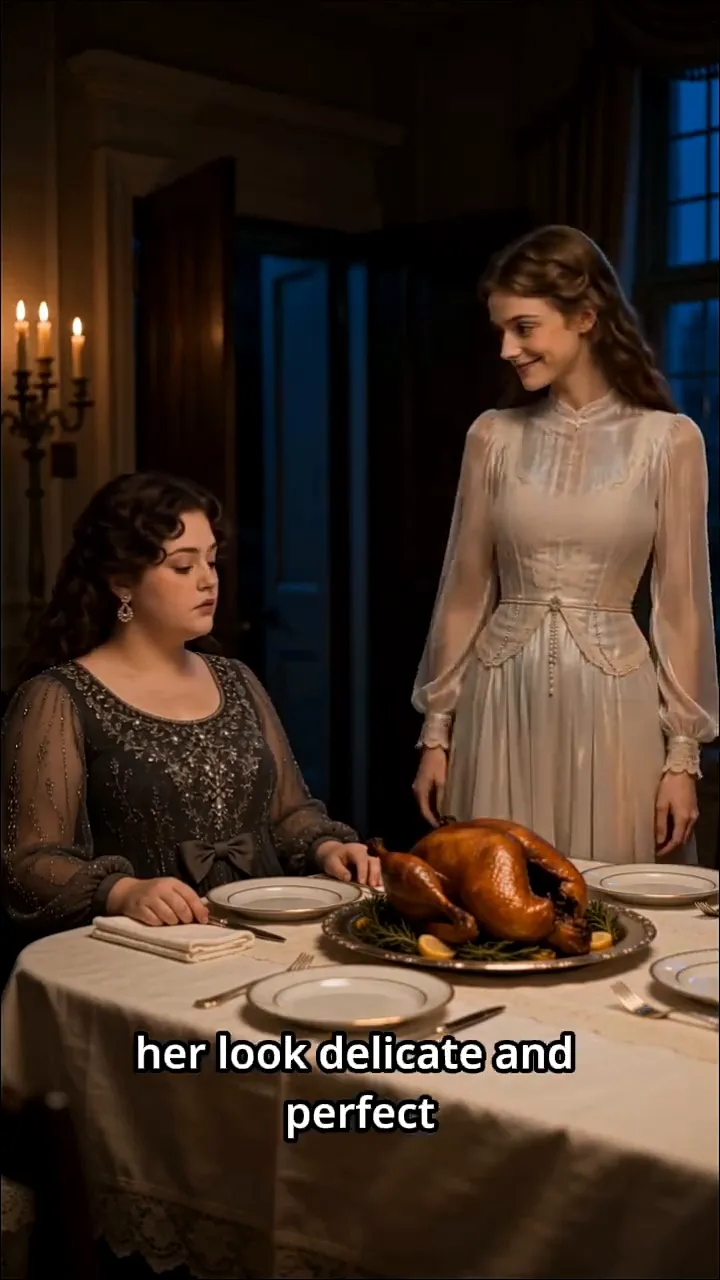
Try to Starve Me, Watch Me Take the Crown - What if the deadliest weapon in the palace wasn’t a dagger—but a plate of roasted pheasant, eaten slowly, while golden letters flare across your vision:
She didn’t lose weight to disappear—she lost it to arrive
Her first attempts were punishing—and futile. Corsets cracked her ribs. Twenty laps around the estate left her gasping in the grass. A “slimming tonic” from a back-alley apothecary nearly stopped her heart—until golden words flashed: “Don’t buy it. It’s fake.”
Then came Dr. Clara Wynn: no scales, no shame, just one question—“What are you really afraid will run out?”
Mirabelle didn’t hesitate: “Food.”
Clara nodded. “Then feed yourself. Just… safer.”
So Mirabelle kept all six meals. All the meat. Just smaller portions. Just steadier. She broke a flaky venison pie in half—and handed one piece to Sir Garrick mid-sword drill. Not as peace offering. As proclamation.
When Captain Gray—the Royal Ranger who’d laughed aloud after she shot an arrow into a tree instead of the target—asked why she’d risk everything for a title she claimed to hate, she answered without flinching:
“So I can eat properly for the rest of my life.”
He dropped his roast chicken. Laughed until he choked. Then started quizzing her on grain tariffs, famine response protocols, and how many bushels of barley a drought-stricken province needs before the first child stops growing.
Real power isn’t posture.
It’s knowing how to feed a kingdom—and keep it fed.
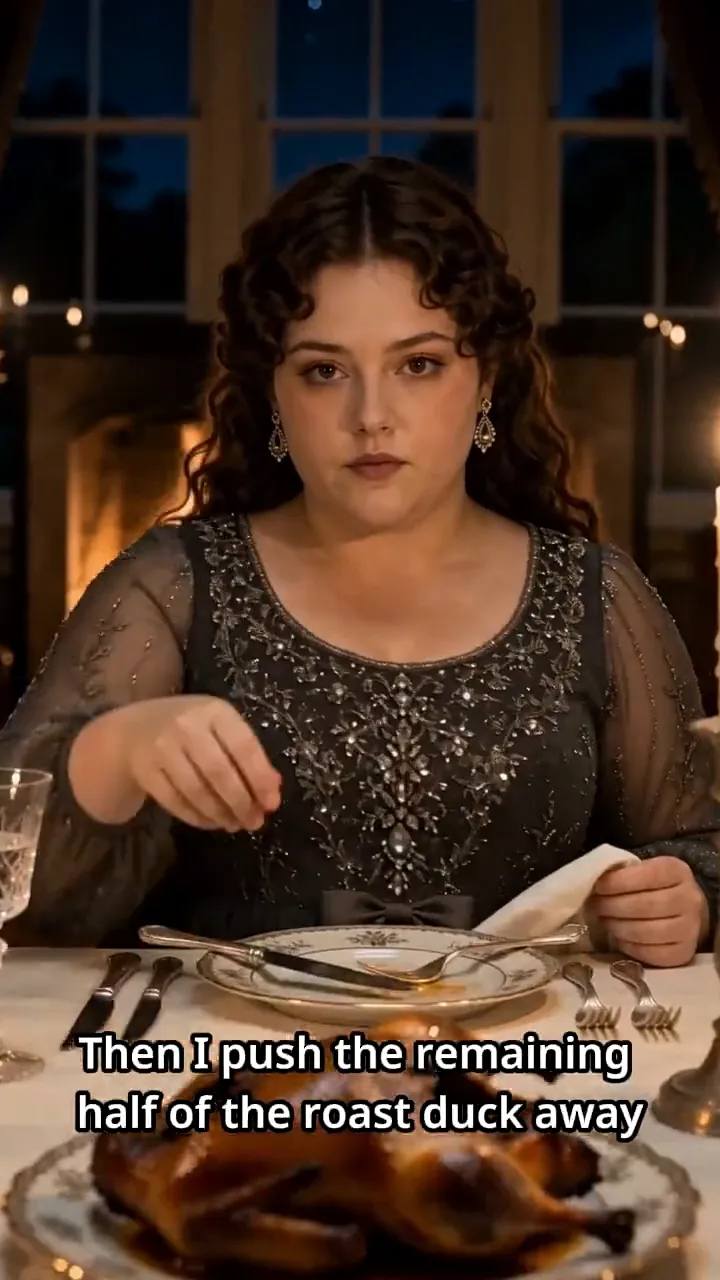
Try to Starve Me, Watch Me Take the Crown - She didn’t lose weight to disappear—she lost it to arrive
The night before selection, Celia poured ink down Mirabelle’s gown—and sliced it clean through the waist
No scream. No stumble.
Mirabelle simply opened the cedar chest beside her bed—and pulled out a spare crimson gown. One she’d packed three days earlier.
Celia’s smile froze.
This wasn’t luck. It was readiness. The same discipline that let Mirabelle ride two hours straight without shifting in the saddle. That let her draw her bow again after five years—and hit the bullseye on her third try. That let her spot tax fraud hidden in the flour delivery logs of a royal bakery.
Now she stands last in the line of twenty-four noblewomen at Lynden Hall Gallery—shoulders relaxed, spine straight, gaze level—not waiting for approval, but measuring. Measuring Celia bathed in golden praise. Watching the court lean in, whispering, “She’ll look ridiculous next to her.”
But Mirabelle isn’t comparing herself to Celia anymore.
She’s comparing herself to the girl in the cave.
And that girl?
She walked out—full, fed, and utterly unafraid.
You need to see the moment Mirabelle serves herself seconds—and watches Celia’s hand tremble as she lifts her fork.
Screenshots2
Frequently Asked Questions
What is Try to Starve Me, Watch Me Take the Crown about?
It's the story of Mirabelle Vale, heir to Brackenfield Manor, who was kidnapped as a child and developed a trauma-driven reliance on food for safety. When she discovers her half-sister Celia plans to usurp the Crown Princess title—and reduce her to a malnourished servant—Mirabelle enters the royal bride selection not to win a man, but to reclaim her agency, health, and right to nourish herself on her own terms.
Where can I watch Try to Starve Me, Watch Me Take the Crown?
Available on our platform for full drama recaps and highlights.
What type of short drama is Try to Starve Me, Watch Me Take the Crown?
It’s a Historical Fantasy Romance with strong elements of Psychological Drama, Revenge, and Coming-of-Age. The story centers on trauma recovery and bodily autonomy rather than conventional beauty standards or romantic tropes alone.
Who are the main characters in Try to Starve Me, Watch Me Take the Crown?
Mirabelle Vale, the resilient protagonist and rightful heir; Celia, her cunning and manipulative half-sister; Captain Gray, a sharp Royal Ranger who challenges Mirabelle intellectually; Dr. Clara Wynn, her compassionate physician focused on trauma-informed care; and Sir Garrick, her disciplined armsmaster who frames physical training as empowerment—not punishment.
Is this drama about weight loss?
No—it’s about food sovereignty and trauma recovery. Mirabelle’s journey prioritizes mental health, bodily autonomy, and intellectual strength over aesthetics. Her transformation is holistic: building stamina, confidence, and critical thinking—not shrinking her body to fit court expectations.
What role do the 'golden captions' play in the story?
The golden captions are mysterious, unexplained visions that reveal hidden truths—most critically, Celia’s plot to seize the crown and control Mirabelle’s diet. They function as both plot device and metaphor: truth emerging unexpectedly, demanding attention, and catalyzing Mirabelle’s refusal to be silenced—or starved—any longer.
Does the drama address real-world issues like diet culture or medical bias?
Yes. It directly critiques how society pathologizes larger bodies while ignoring trauma, and how medical systems often treat symptoms (weight) instead of root causes (anxiety, abuse, powerlessness). Dr. Wynn’s approach—centering consent, dignity, and psychological safety—models ethical, patient-led care.
Quick Summary
She didn’t want the crown—she wanted to eat without fear. Meet Mirabelle: trauma survivor, strategic dieter, and the most unexpectedly powerful contender in royal history.
Watch NowYou May Also Like

After My Arranged Engagement, My Ex Begged for Me Back…
Mia comes home to find her boyfriend and best friend together—then chooses an arranged marriage over a man who never valued her. A sharp, emotionally precise revengeadjacent romance.

Don't Mess with the Rich Girl - Complete Story Summary &…
She faked poverty to fit in—until they tried to bury her with it. Watch Xena Stone flip the script on betrayal and class prejudice.

He Called Me Fat Before I Became His Obsession - Behind…
She loved him for 10 years. He used her for one night. Now he can’t let her go—and she’s done defining herself through him.

He Regretted Dumping His Fat Online Date - In-Depth Recap…
She lost 90 lbs for him—then found his cruel posts trading her off. Now Riley’s glowing up, ghosting him, and falling for someone who loves her soul. Mustwatch revenge romance!

Queen Of The Frost Storm - Spoiler-Filled Recap & Ending…
She came for marriage. They demanded kneeling. She rang the dragon bell—and 300,000 riders answered. A queen doesn’t beg for respect. Watch the frost storm rise.

She Never Loved Him Back - Everything You Need to Know…
Coldhearted Olivia marries the empire’s golden heir—only to discover he wants her sister too. Brace for icy vows, hidden daggers, and a revenge plot that starts at the altar.
8 episodes available