The Chosen Outcast - Spoiler-Filled Recap & Ending Deep Dive
Livia, mocked for her body and shattered by Lucas's public cruelty, retreats into silence—until Sebastian, the masked transfer student no one understands, becomes her quiet anchor. When Lucas suddenly notices her transformation—and reasserts control—Livia must choose between old wounds and a fragile new trust.
Characters
Breno Alves
Lucas’s loud, mocking friend who amplifies public humiliation and reinforces toxic social hierarchies through crude labeling.
Isabela Martins
The captain of the cheerleading squad—Lucas’s visible counterpart in social perfection; weaponizes appearance norms to belittle Livia’s body and pain.
Livia
A resilient, observant high school student who endures weightbased bullying and emotional betrayal, gradually reclaiming agency through quiet selfreliance and unexpected connection.
Lucas Andrade
The popular, emotionally volatile football player whose initial intervention masks entitlement; uses mockery, sabotage, and surveillance to maintain control and punish Livia’s autonomy.
Sebastian Morgan
A reserved, masked transfer student with unspoken physical pain and profound empathy; communicates through presence, not performance, and defends dignity without condescension.
Synopsis
Livia’s trauma begins with internalized shame: she starves herself to win Lucas’s approval, nearly fainting in PE before he intervenes—not out of kindness, but possessive irritation. Her confession triggers not reciprocation but collective ridicule, orchestrated by Breno Alves and amplified by Lucas’s cruel, dismissive question: 'Do you think my feet are still that low?' That moment shatters her belief in exception or fairness. Lucas’s later public abandonment during her injury—refusing help while shielding Isabela under his umbrella—cements her invisibility. She withdraws, channels energy into academics, and earns top marks—only for Lucas to weaponize even that success, sabotaging her connection with Enzo by dumping degrading photos on her desk and mocking Enzo’s 'taste.' After two days of enforced rest, Sebastian arrives masked and silent, assigned beside her. Their relationship develops slowly: no grand declarations, only shared quiet, mutual witnessing—her noticing his pain, him recognizing her dignity. When he collapses from stomach pain, she supports his tall frame; when he hears her mocked as 'the fat girl,' he straightens instantly and confronts Breno—not with violence, but with devastating clarity: 'You’re not fat—you’re too thin, like you’ll break in the wind.' This defense isn’t romantic grandstanding—it’s alignment. Sebastian sees her body not as flaw or fetish, but as real, vulnerable, worthy of protection. Meanwhile, Lucas’s obsession sharpens: he tracks her weight loss, grabs her wrist accusingly, and demands to know why she’s 'dieting again'—revealing his fixation isn’t care, but control. His question—'How can you not see who really cares about you?'—exposes his narcissistic framing: caring means surveillance, not respect. Livia’s growth is embodied: she stops dieting *because* she no longer loves Lucas, and her body changes naturally through movement and stability—not punishment. Sebastian never asks her to change. He calls her 'Alícia' by mistake once—then corrects himself, showing attention, not assumption. Their bond thrives in absence of performance: walking laps silently, sharing space without expectation, holding each other up literally and metaphorically. The tension isn’t 'who will she choose?' but 'will she finally believe she deserves safety—and that it doesn’t require shrinking?'
What if your loudest rebellion wasn’t a shout—but the exact moment you stopped shrinking to make someone else comfortable?
That’s the breathless, heart-in-throat silence right after Lucas laughs—not at a joke, but at you, in front of everyone.
Livia doesn’t cry. Doesn’t scream.
She just goes still—like something inside her snaps shut and locks tight.
That’s the day she stops speaking to him…
and starts learning how to exist without him watching.
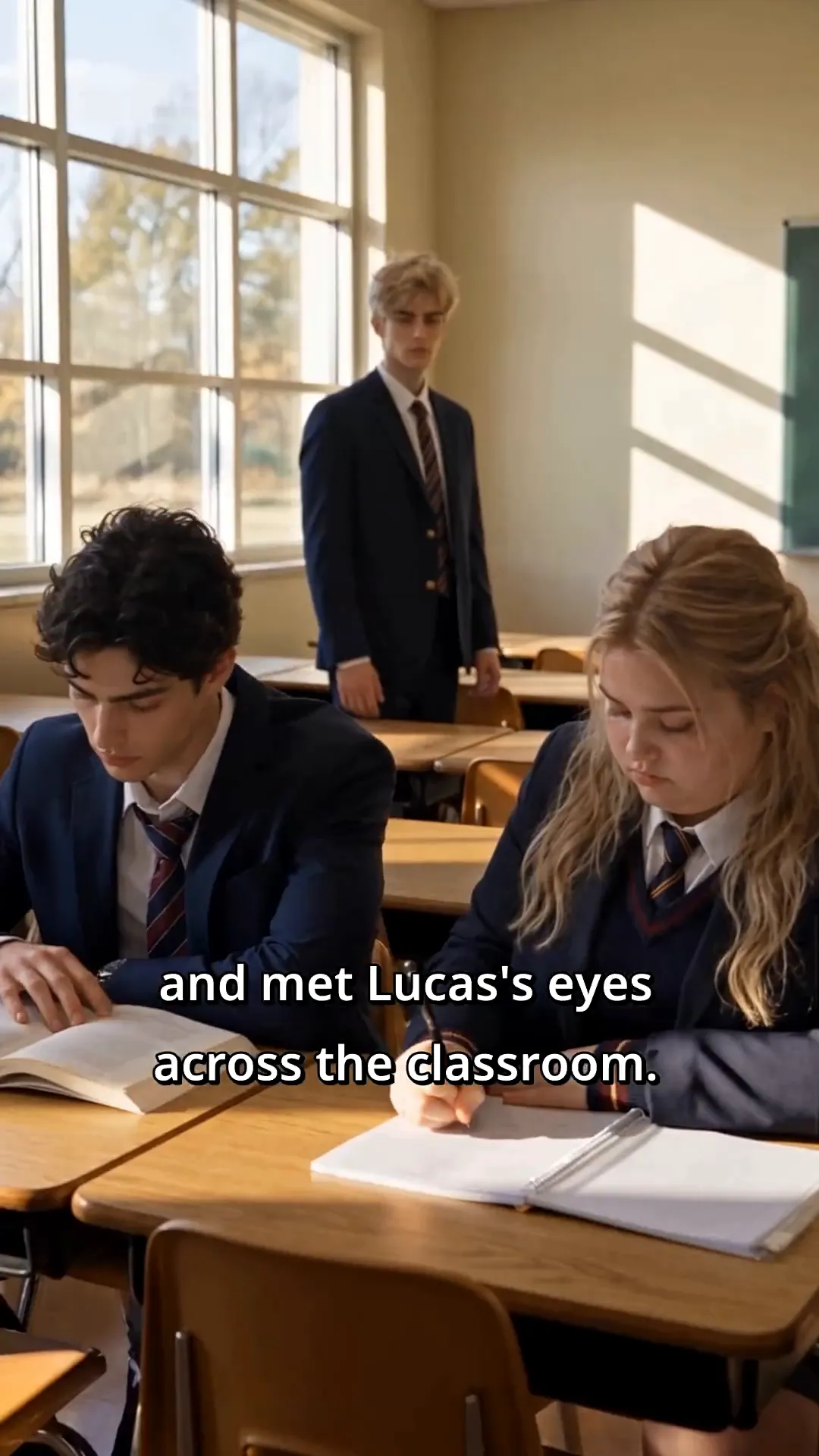
The Chosen Outcast - Introduction
Quick Info
- Platform: ShortMax
- Genre: Drama, Coming-of-Age, Romance, Healing Journey
The boy who hides—and the girl who finally stops performing
Sebastian Morgan doesn’t remove his mask.
Doesn’t explain himself.
Doesn’t ask for trust—he just shows up, tall and quiet beside Livia’s desk, like he already knows where he belongs.
No grand speeches. No pity.
Just the weight of his hand on her shoulder when he stumbles mid-step, whispering:
“Can I lean on you for a moment?”
Later—no fanfare, no music cue—he steps into Breno’s mockery, voice calm as stone:
“You’re not fat—you’re too thin, like you’ll break in the wind.”
He doesn’t defend her body.
He witnesses it—as real. As fragile. As worthy.
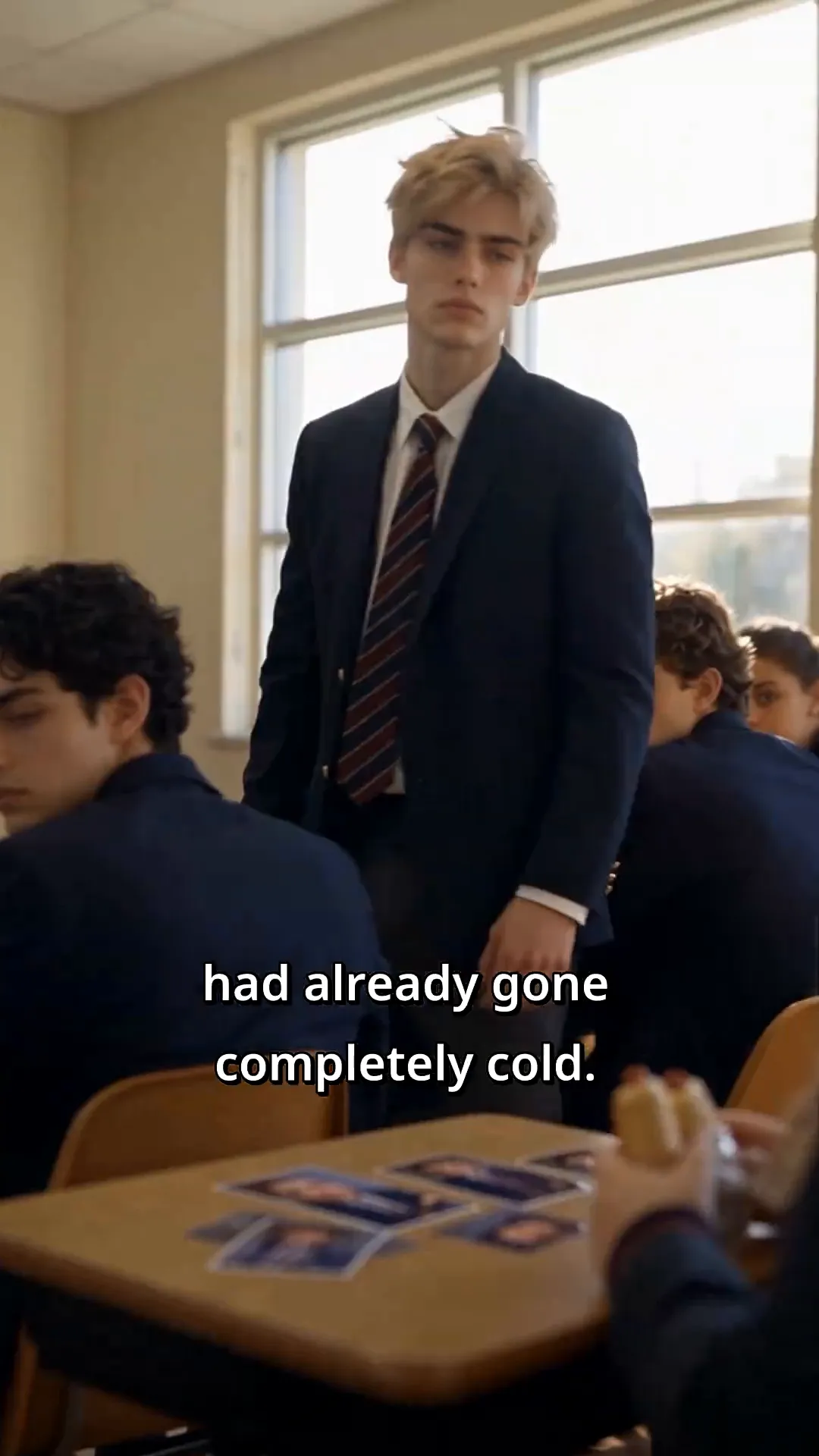
The Chosen Outcast - The boy who hides—and the girl who finally stops performing
The boy who watches—and panics when she stops looking back
Lucas doesn’t miss her weight loss.
He tracks it. Grabs her wrist like evidence.
Demands to know why she’s “dieting again”—as if her body is still his report card.
His question—“How can you not see who really cares about you?”—isn’t love.
It’s surveillance dressed as devotion.
Because when Livia walks past him without flinching?
When she chooses Sebastian’s silent thermos over Lucas’s loud control?
That’s not rejection.
That’s uncontrollable.
And he has no script for that.
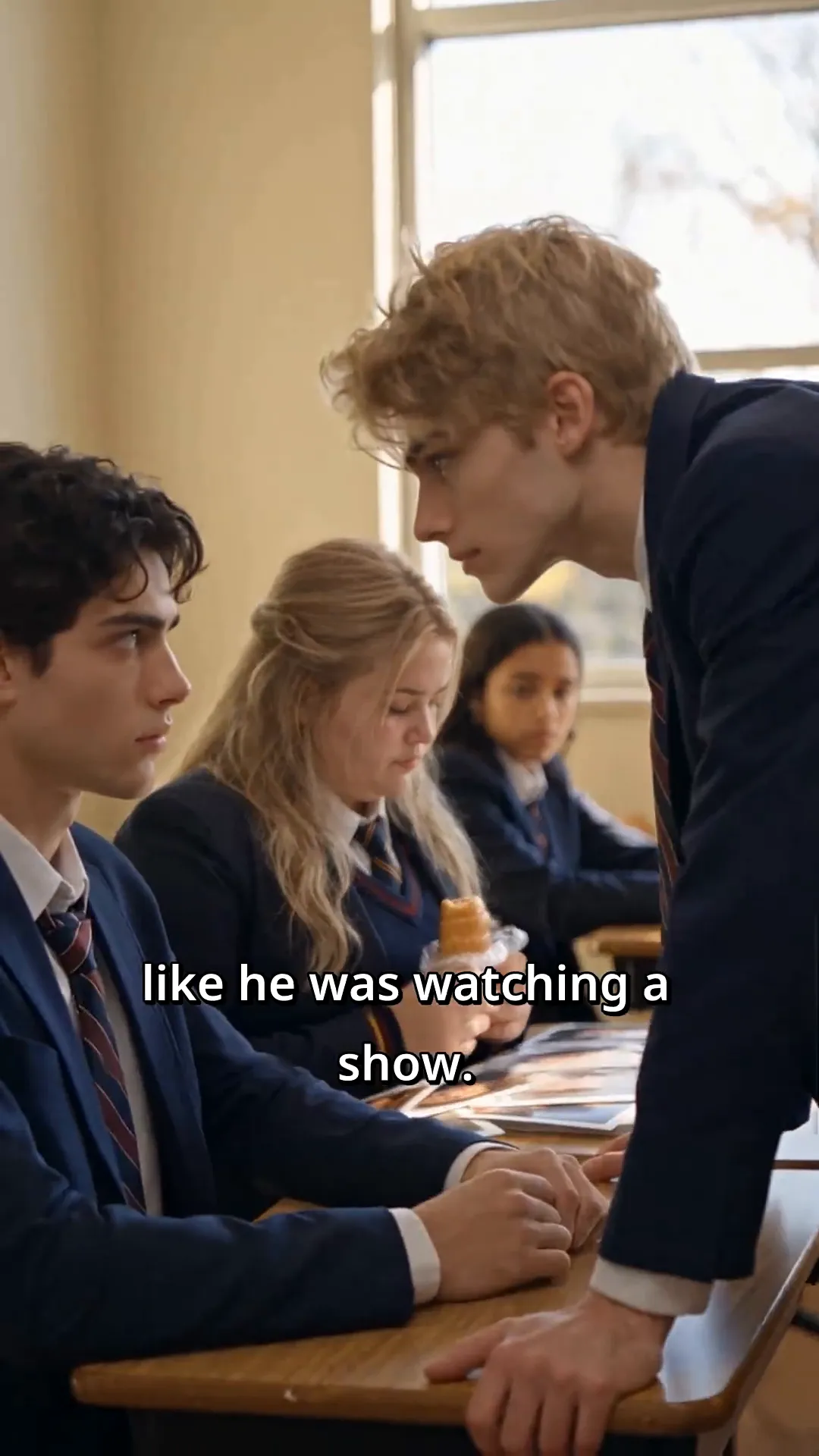
The Chosen Outcast - The boy who watches—and panics when she stops looking back
Who heals without erasing themselves?
Who loves without demanding performance?
And what happens when the person who spent years trying to disappear…
finally decides to take up space—exactly as they are?
Screenshots3
Frequently Asked Questions
What is The Chosen Outcast about?
The Chosen Outcast follows Livia, a high school student enduring relentless weight-based bullying and public humiliation after confessing her feelings to popular classmate Lucas Andrade. Her life shifts when Sebastian Morgan—a quiet, masked transfer student—enters her world, offering silent but profound support. As Livia heals emotionally and gains strength on her own terms, Lucas reappears, unsettled by her transformation and determined to reclaim control, forcing her to confront old pain and choose authentic connection over familiar harm.
Where can I watch The Chosen Outcast?
Available on our platform for full drama recaps and highlights.
What type of short drama is The Chosen Outcast?
It’s a character-driven coming-of-age drama blending romance, emotional healing, and quiet resilience. Unlike typical transformation narratives, it centers dignity over performance and healing without body erasure—emphasizing inner growth, empathetic connection, and resistance to social coercion.
Who are the main characters in The Chosen Outcast?
Livia is the resilient protagonist navigating bullying and self-reclamation. Sebastian Morgan, the masked transfer student, offers wordless empathy and protective presence. Lucas Andrade—the charismatic but volatile antagonist—represents toxic social power. Supporting antagonists include Breno Alves, his mocking friend, and Isabela Martins, the image-obsessed cheer captain who reinforces exclusionary norms.
Why does Sebastian wear a mask—and what does it symbolize?
Sebastian’s mask reflects both physical pain he conceals and a broader metaphor for emotional boundaries and chosen silence in a world that demands performance. Rather than hiding shame, it signals agency: he reveals himself only through action—not explanation—modeling empathy that doesn’t require visibility or validation.
Does Livia lose weight in the story?
No—her physical transformation stems from strength training and embodied confidence, not dieting or weight loss. The story deliberately rejects weight-centric narratives, framing her growth as increased stamina, posture, and self-trust. Her healing is measured in voice, choice, and boundary-setting—not scale numbers.
Is there a resolution between Livia and Lucas?
The drama concludes with Livia choosing clarity over reconciliation: she declines Lucas’s late-overture, affirming her right to safety and respect. His arc remains unresolved—not redeemed, but exposed. The focus stays on Livia’s autonomy and her deepening, unspoken bond with Sebastian, leaving room for growth beyond the frame.
Quick Summary
A bullied teen finds unexpected strength in a masked classmate—no grand speeches, just steady presence. Raw, healing, and deeply human.
Watch NowYou May Also Like

After My Arranged Engagement, My Ex Begged for Me Back…
Mia comes home to find her boyfriend and best friend together—then chooses an arranged marriage over a man who never valued her. A sharp, emotionally precise revengeadjacent romance.

Ditching the Jerk: The Mafia Don's Contract Bride - The…
A broke college student signs a fake marriage contract with a dangerous mafia don—only to find real healing, unexpected tenderness, and a little boy who changes everything.

He Called Me Fat Before I Became His Obsession - Behind…
She loved him for 10 years. He used her for one night. Now he can’t let her go—and she’s done defining herself through him.

He Dumped Me On A Midnight Highway Just To Save $500…
Stranded at midnight for $500? Watch Olivia turn betrayal into bravery—and discover why walking away was her bravest move yet.

His Runaway Maid - Spoiler-Filled Recap & Ending Deep Dive
A maid’s quiet loyalty sparks a lord’s rise—and a forbidden love that defies class. Watch her transform from servant to power broker.

My Crush Loved Me After My Glow-Up Only to Lose Me to His…
Avery waited years for Blake—until a hockey prank sent her to rival Dylan. What happened next changed everything. Watch her glowup unfold.
7 episodes available