Odysseus’ Scandalous Queen Short Drama Recap
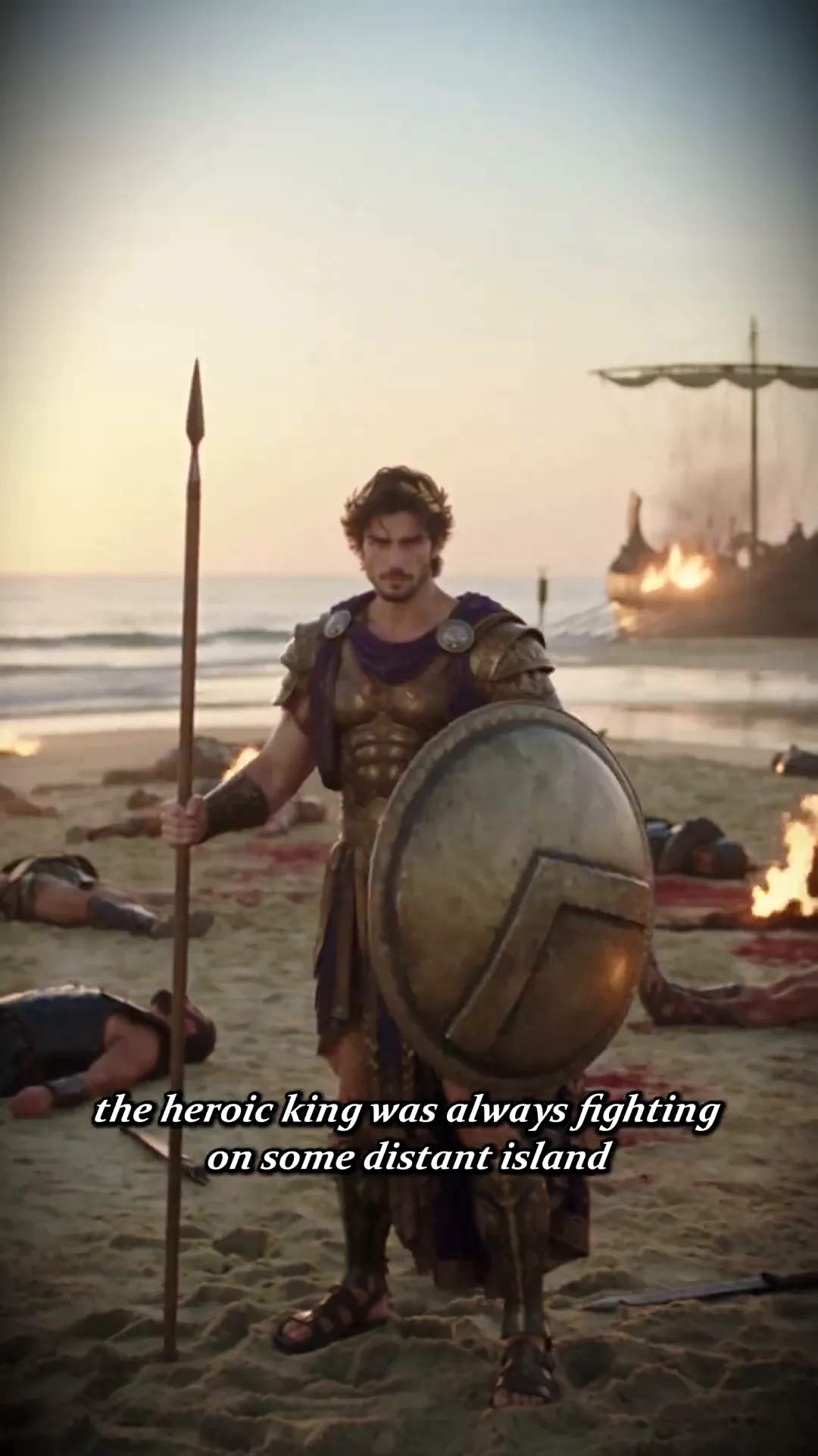
Lyra, feared as a 'devil' since birth, marries the absent King Odysseus of Ithaca to seize power—only to be disarmed by a trembling child’s plea: 'Will you protect me?' What begins as a cold political alliance ignites into fierce maternal defiance when she confronts nobles who starve, shame, and enslave the king’s own children.
Characters
Antius / Antonis / Ann Tonas
Son of noble Uppitus; wields de facto control over the palace, abuses the royal heirs, and engages in illicit relationships with servants; serves as primary antagonist.
Lyra
Fiercely intelligent and feared woman, married to Odysseus as a political maneuver; transforms from powerseeker to protective stepmother and de facto ruler of Ithaca during his absence.
Melantho
Palace maid who publicly disciplines Prince Tylies; exposed as Antius’s mistress and symbol of systemic corruption.
Mikia
Odysseus's young daughter, traumatized and neglected, living in squalor; first to recognize and trust Lyra as a mother figure.
Odysseus
Widowed King of Ithaca, absent at war and under Athena's mentorship; his prolonged absence creates a power vacuum exploited by nobles and ultimately challenged by Lyra.
Teous / Tylies / Telya
Odysseus's son, silent and deeply wounded; initially distrustful but gradually bonds with Lyra after witnessing her courage and conviction.
Uppitus
Corrupt noble who controls the palace in Odysseus’s absence; father of Antius and architect of the heirs’ mistreatment.
Synopsis
Lyra enters Ithaca not as a bride but as a conqueror—raised to be feared, unmarriageable, and ruthlessly pragmatic. Her marriage to Odysseus is transactional: she seeks the throne, not love. Yet the moment Mikia, Odysseus’s young daughter, clings to her and asks, 'Are you my new mommy? Will you protect me?', Lyra’s resolve fractures and reforges around protection—not power. She sees herself in the girl: a child once abandoned, bullied, and unprotected by those meant to care for her. Her empathy triggers immediate action—kneeling, promising safety, and confronting Antius when he drags Mikia from the royal quarters. The palace hierarchy, controlled by Uppitus and his son Antius, treats the heirs as outcasts: they wear rags, sleep in sheds, and endure public humiliation, while Antius’s illegitimate son Nico lives luxuriously. When servant Melantho scolds the shivering Prince Tylies for spilling water, Lyra intervenes with volcanic fury—not as a queen enforcing decorum, but as a mother reclaiming dignity. Her slap isn’t just punishment; it’s declaration. Antius retaliates, demanding apology—but Lyra weaponizes truth, accusing him of adultery and exposing his manipulation of palace staff. Her line—'Every single servant belongs to Odysseus. Why would you say that? Unless she’s your mistress.'—reveals her strategic acumen and moral clarity. The children’s shifting gaze—from suspicion to awe—mirrors the quiet revolution unfolding: Lyra isn’t seizing the palace; she’s rebuilding its soul. Odysseus remains absent, mentored by Athena, leaving Lyra to govern not by decree, but by defiant love—and the unspoken question lingers: when the king returns, will he see a usurper… or the only person who saved his children?
Lyra’s hand hovers over Antius’s throat—not to strangle, but to silence him just long enough to whisper: “You starve children. I protect them. That makes me dangerous—and you, obsolete.”
The Devil Who Knelt
“I was a devil from the day I was born.”
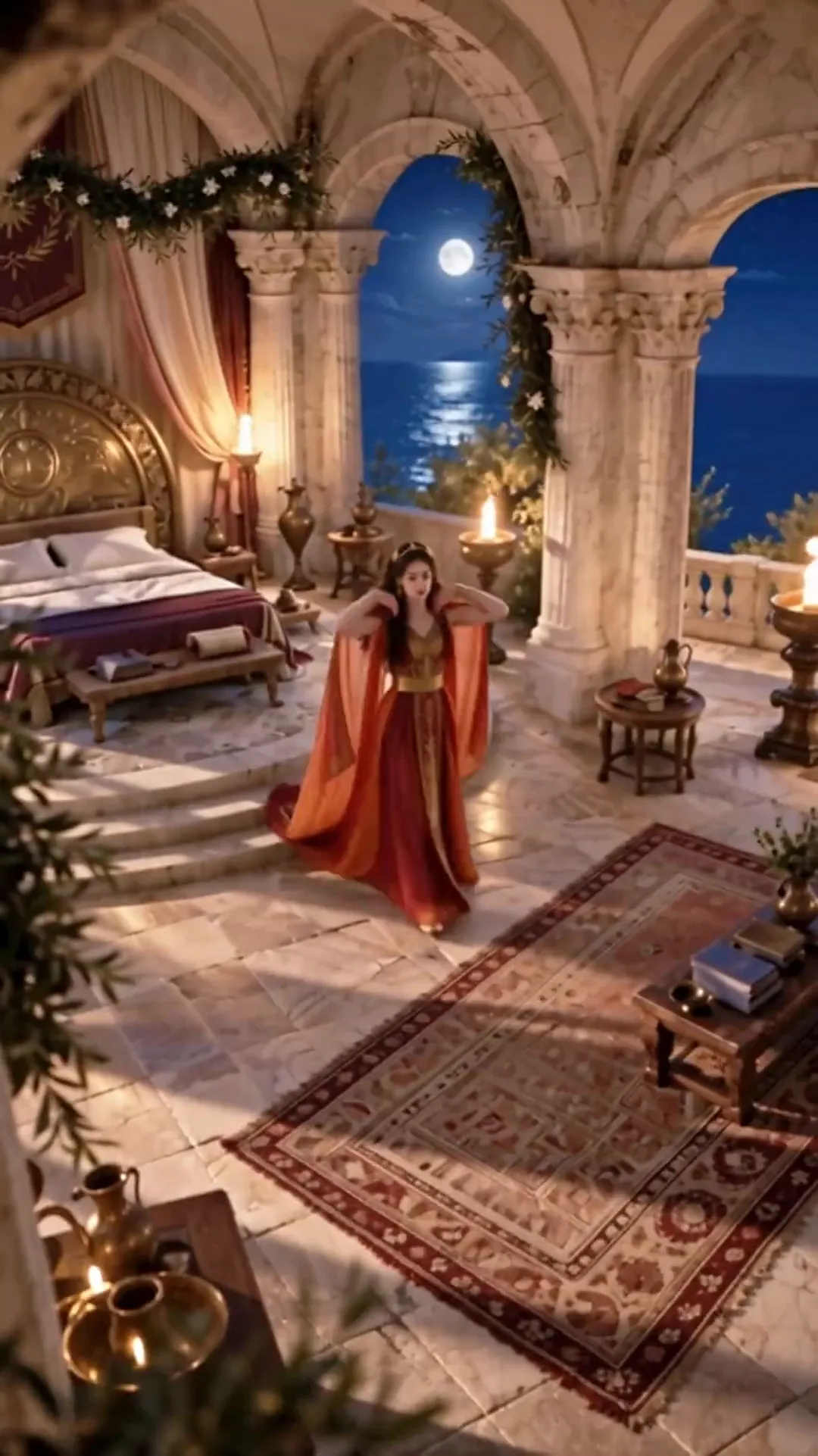
She came to Ithaca as Odysseus’s wife—no fanfare, no feast, no explanation. The palace held its breath. Servants stepped aside. Antius watched from the archway, arms crossed, eyes sharp.
Then a small voice broke the silence.
“Are you really my new mommy? Will you protect me?”
Mikia stood barefoot in the torchlight, clutching a frayed shawl. Lyra knelt. Took her hand. Said nothing—but nodded.
And then, low, steady, meant for no one but the girl:
“So I decided, I’ll protect you even if I have to tear this island apart.”
Telya stood nearby, silent, arms folded tight. Antius moved forward—reached for Mikia’s arm. Lyra caught his wrist. Held it. Didn’t squeeze. Just held.
The Slap That Changed Everything
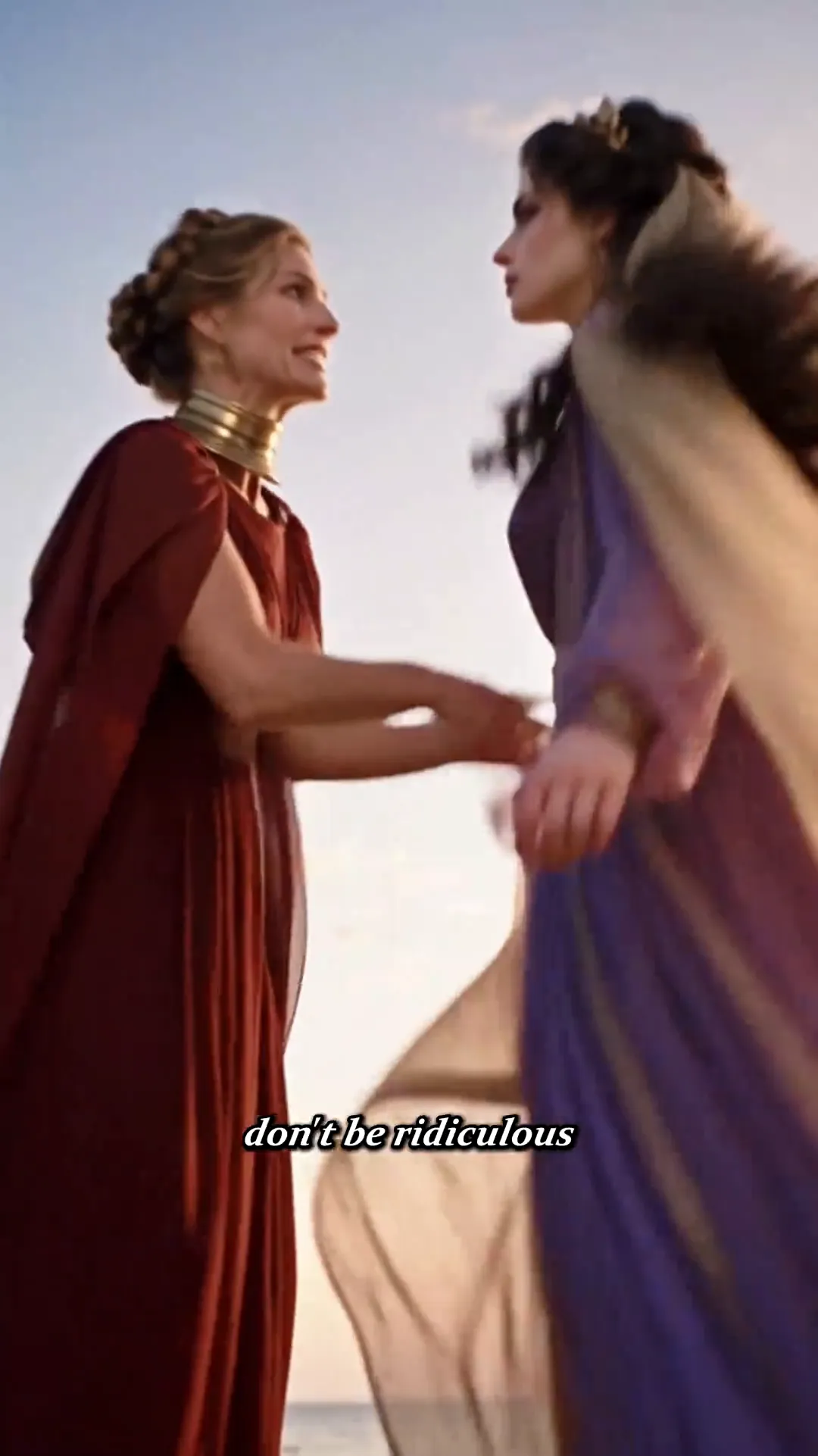
Melantho raised her voice at Telya on wet stone. Lyra stepped between them.
“He is the king’s son. If he spilled water, you wipe it up.”
“No servant has the right to teach him.”
Melantho opened her mouth—then stopped. Lyra’s palm struck her cheek. Not hard enough to draw blood. Hard enough to drop her to her knees.
No one spoke. No one moved.
Lyra turned—not to the servants, not to Antius watching from the corridor—but to Telya. Her gaze held his until he blinked first.
The Truth That Could Not Be Denied
Antius stormed into the hall, face flushed. “How dare you lay hands on my servant?”
Lyra didn’t raise her voice. She looked at Melantho, then at Antius—and said, clear as cut glass:
“Every single servant belongs to Odysseus. Why would you say that? Unless she’s your mistress.”
His jaw tightened. His breath hitched. He didn’t answer.
Mikia tugged Lyra’s sleeve. Telya stood still, watching.
Lyra smiled—small, certain—and said, soft but carrying:
“I don’t even fear the gods.”
She didn’t sit on the throne that day.
She stood—between the children and the storm—and let the silence speak first.
Screenshots3
Frequently Asked Questions
What is Odysseus’ Scandalous Queen about?
Odysseus’ Scandalous Queen follows Lyra—a fiercely intelligent and feared woman—who marries the absent King Odysseus of Ithaca in a political alliance. Upon arriving in Ithaca, she discovers his neglected and abused children, Mikia and Teous (also called Tylies/Telya), living in squalor under the tyranny of corrupt nobles Uppitus and his son Antius (also referred to as Antonis/Ann Tonas). Lyra immediately steps in as protector, defies palace enforcers like maid Melantho, and publicly exposes Antius’s abuses—transforming her marriage of convenience into a fierce campaign for justice and maternal redemption.
Where can I watch Odysseus’ Scandalous Queen?
You can watch the full short drama on ShortMax. This page provides the English recap, cast, and preview; stream the complete series on the official ShortMax app or site.
What type of short drama is Odysseus’ Scandalous Queen?
Odysseus’ Scandalous Queen is a high-stakes short drama blending Revenge, Political Intrigue, Enemies to Lovers, and Maternal Redemption. It features Hidden Identity elements, billionaire-adjacent power dynamics, and a strong Family core—centered on Lyra’s transformation from calculating queen to devoted protector.
Who are the main characters in Odysseus’ Scandalous Queen?
The protagonists are Lyra—a feared, politically astute woman who redefines queenship through action—and Odysseus, the widowed King of Ithaca, whose prolonged absence at war creates the crisis. Supporting characters include his traumatized children Mikia and Teous / Tylies / Telya. Primary antagonists are Antius / Antonis / Ann Tonas, his father Uppitus, and palace enforcer Melantho.
What does Lyra mean when she says, 'I was a devil from the day I was born.'?
Lyra uses this line to reflect how society has labeled her since childhood—fearful of her intelligence, ambition, and refusal to conform. It underscores her initial reputation as cold and dangerous, which sharply contrasts with her later protective devotion to Mikia and Teous—revealing that her 'devil' nature is redirected toward justice, not cruelty.
What is the significance of the line, 'Are you really my new mommy? Will you protect me?'
This vulnerable question—asked by young Mikia—serves as the emotional turning point of the story. It disarms Lyra’s political agenda and ignites her transformation from power-seeker to maternal guardian. Her vow in response—'So I decided, I'll protect you even if I have to tear this island apart.'—anchors the drama’s central theme: protection as the highest form of power.
Is Lyra’s relationship with Odysseus purely political—or is there genuine connection?
Though their marriage begins as a strategic alliance, Lyra’s actions—defending his children, asserting authority in his name, and confronting corruption in his absence—suggest deep alignment with his values. Her declaration, 'I don't even fear the gods,' echoes Odysseus’s own mythic defiance, hinting at a resonance beyond politics. Their evolving dynamic embodies the 'Enemies to Lovers' genre—but the full depth of their bond remains unfolding.
Quick Summary
Odysseus’ Scandalous Queen: Lyra arrives to claim the throne—but finds Prince Teous and Princess Mikia abused by nobles Uppitus & Antius.
You May Also Like
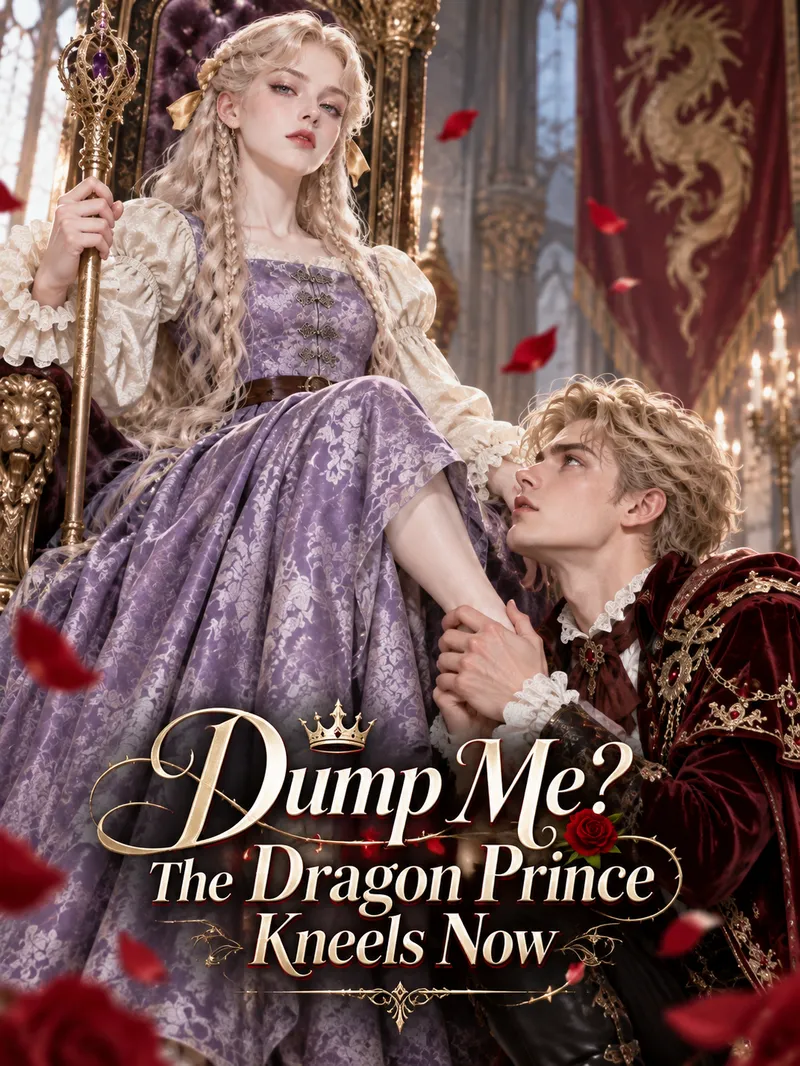
Dump Me? The Dragon Prince Kneels Now Recap, Cast & Preview
Priya gets dumped by dragon prince Julian on Ember Eve—left injured, ignored, and replaced. Two years later he begs forgiveness, but she’s done.

Fifty‑Dollar Limit When My Life Needed Another Man’s…
Elara Vale's $50 spending limit turns deadly when a $12,000 hospital deposit is denied while Julian approves $380,000 for Celeste.

My Five Brothers Raised a Sleeping Goddess Recap, Cast &…
Ivy, a sleeping primordial goddess raised by five tigershifter brothers, awakens her golden power to save them from the Wolf King in this addictive fantasy...
My Mafia Ex Never Knew I Saved Him Short Drama Recap
Evelyn saved mafia boss Dante Moretti’s life—then vanished, letting him hate her.
Back With Baby, Ex Regrets Deeply Short Drama Recap
Vanessa gets dumped by Seth, marries billionaire Grayson, and returns with a baby for revenge! Watch the ex regret everything in this short drama recap.
Dumped for Being XXL, Desired by the Mafia Don Short Drama…
Dumped for Being XXL, Desired by the Mafia Don short drama recap: Nora Bennett signs a fake marriage contract with ruthless don Luca Castelano—but love...